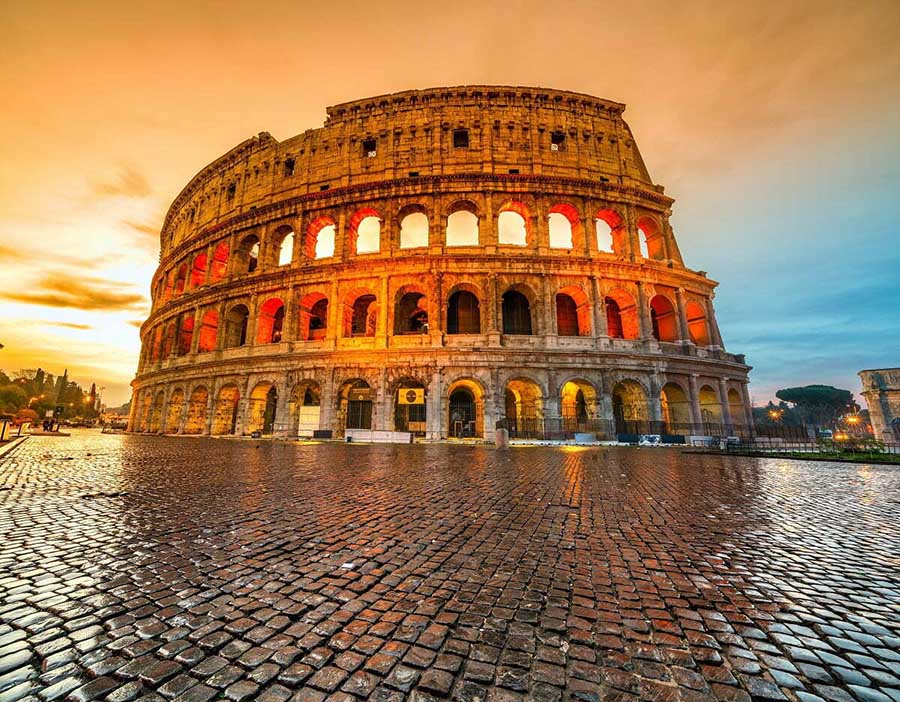
This is a striking and atmospheric photograph capturing the Roman Colosseum (Flavian Amphitheatre) at sunset. Here’s a breakdown of its key elements:
Subject & Composition
The Colosseum stands as the monumental centerpiece, shot from a low angle to emphasize its grandeur and timeless presence. Its weathered travertine stone facade, marked with rows of arches, is illuminated in rich golden and orange hues from the setting sun, creating a dramatic play of light and shadow.
Light & Color
The warm sunset transforms the ancient structure, glowing from the left side of the frame. The arched openings reveal subtle interior lighting, adding depth. The sky transitions from a vivid golden-orange near the sun to softer purplish-blue tones on the right, enhancing the scene’s ethereal and historical mood.
Foreground & Setting
A wide, uneven Roman-style stone paves the foreground, leading the viewer’s eye toward the Colosseum. Its slightly reflective surface suggests recent rain or the lingering glow of twilight, adding to the atmosphere. The empty space around the landmark emphasizes its solitude and scale.
Mood & Meaning
This image merges historical majesty with poetic tranquility. The sunset symbolizes both the passage of time and the enduring legacy of Roman engineering. The lighting evokes a sense of reverence, as if the ancient arena is caught in a quiet moment of reflection between the fading day and the coming night.
Artistic Note
The photographer skillfully uses natural light to highlight texture and form, turning an iconic monument into a canvas of warmth and layered history. The composition balances architectural solidity with the fleeting beauty of twilight, making the scene feel both epic and intimate.
The History of the Roman Colosseum
I. Origins and Construction (c. 70–80 AD)
The Colosseum, originally known as the Flavian Amphitheatre, was commissioned by Emperor Vespasian of the Flavian dynasty around 70–72 AD. It was built on the site of a vast artificial lake that had been part of the extravagant Domus Aurea(Golden House) complex of the despised Emperor Nero. This act was a symbolic gesture to return the land to the Roman people. The amphitheater was completed in 80 AD under Vespasian’s son and successor, Titus, and further modified under Domitian (81–96 AD).
II. Architectural Innovation
As the largest amphitheater ever built, it could hold an estimated 50,000 to 80,000 spectators. Its elliptical structure, standing about 48 meters high, was a feat of Roman engineering, utilizing concrete, travertine stone, and a complex system of vaults and arches. The façade’s three tiers of arches, framed by columns in the Doric, Ionic, and Corinthian orders, reflected Roman architectural hierarchy. An elaborate underground area called the hypogeum—added later—housed animals, gladiators, and stage machinery, allowing for spectacular theatrical effects.
III. Purpose and Spectacles
The Colosseum was primarily used for public entertainment, including:
Gladiatorial contests (munera) – often funded by emperors or elites to demonstrate power and gain popularity.
Animal hunts (venationes) – exotic beasts like lions, elephants, and bears were hunted or pitted against each other.
Mock naval battles (naumachiae) – the arena could be flooded for re-enacted sea battles.
Public executions – often staged as mythological dramas where condemned prisoners were killed by animals.
These events reinforced social order, displayed imperial grandeur, and served as a tool for political propaganda.
IV. Later History and Decline
After the fall of the Western Roman Empire, the Colosseum’s use declined. It was repurposed as:
A fortress in the medieval period.
A quarry for building materials (e.g., for St. Peter’s Basilica) after earthquakes damaged its structure.
A site for Christian shrines, inspired by legends of early Christian martyrs (though historical evidence is limited).
By the 18th century, it became a symbol of the Catholic Church’s history, and efforts to preserve it grew.
V. Modern Significance
Today, the Colosseum is a UNESCO World Heritage Site and one of the world’s most iconic monuments. It stands as a testament to Roman engineering, the social and political life of antiquity, and the complex legacy of public spectacle—both awe-inspiring and brutal. Its image continues to evoke reflections on power, entertainment, and the passage of time, much like the photograph you shared, which captures its enduring grandeur against the timeless sky.
 鲁ICP备17027311号-4
 举报电话:15969813136